How to Get Fence Leads: Where Fence Work Actually Comes From
Updated August 2026

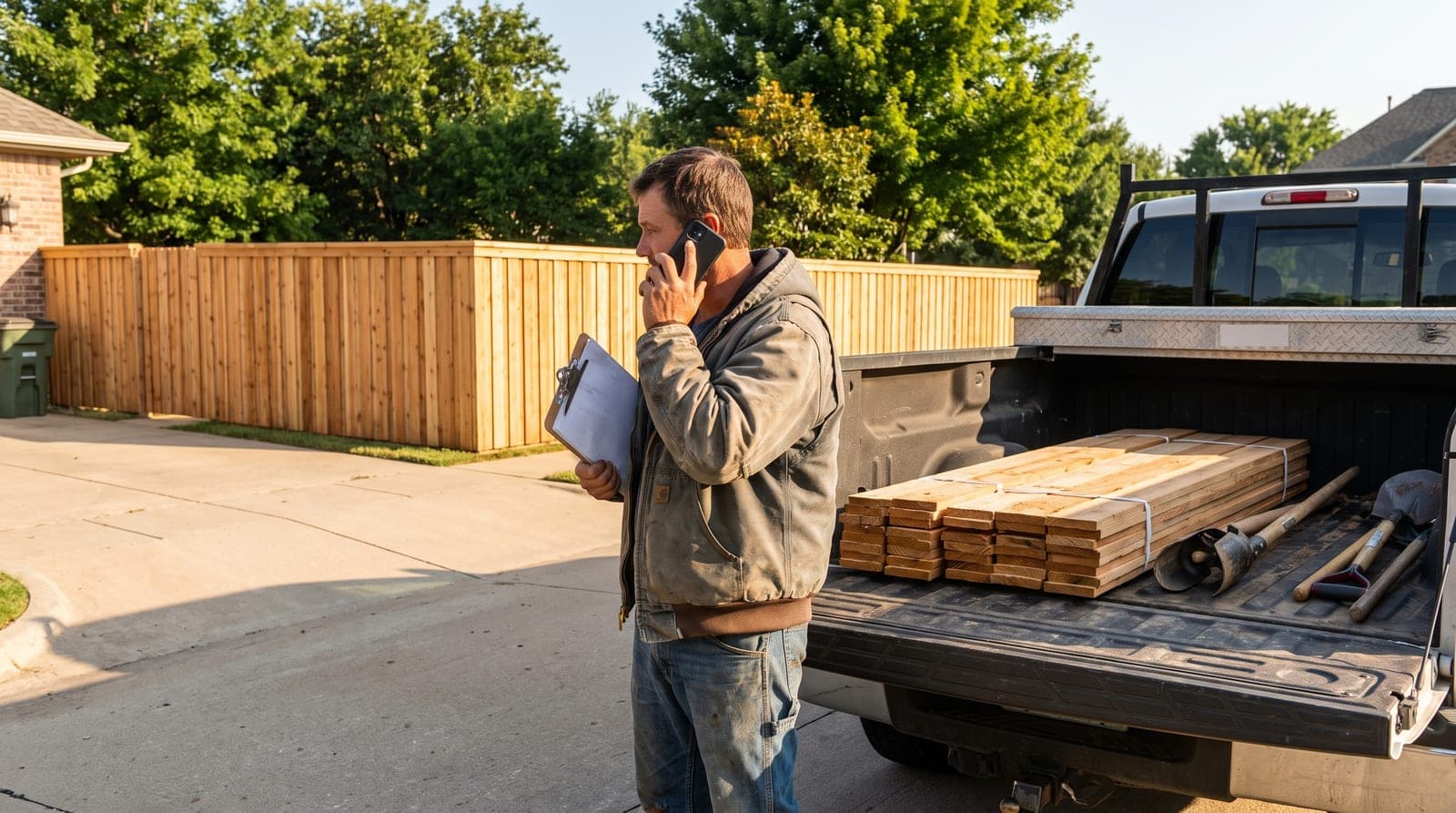
Every fence company has a season where the phone stops. The reflex is to buy leads, because that is the thing you can buy on a Tuesday — and it is usually the most expensive job you will book that month. This is an honest look at the five places fence work comes from, what each actually costs per booked job, and which ones you can still start this week.
The five places fence jobs come from
Almost every residential fence job traces back to one of five sources: someone searching, someone you already worked for, someone driving past your last job, a builder or property manager who books repeat work, or a lead you paid a third party for.
They are not interchangeable. They differ in what a job costs to win, how long it takes to turn on, and — the part most people miss — how many other contractors are quoting the same yard. A referral has a close rate several times that of a shared paid lead, because you are the only number in the conversation.
The right mix depends on which problem you have. If you need work in ten days, that is a different answer from wanting a phone that rings in April without you doing anything.
Paid leads: what you are actually buying
Lead marketplaces sell you a homeowner's contact details, usually for somewhere between $20 and $100 for residential fencing depending on the market and how the lead was captured. Understand three things before you spend anything.
Most are sold more than once. The standard model sends the same homeowner to three to five contractors. You are not buying a customer, you are buying a place in a race, and the winner is usually whoever calls within a few minutes.
You pay for the bad ones too. Wrong numbers, renters, tire-kickers, and people who filled a form in January for a fence they will build in two years all cost the same as a real job. Every marketplace has a credit process; budget for the ones you will not get back.
The economics only work if you answer fast and quote fast. At $50 a lead, a 1-in-8 close rate is $400 of lead cost per booked job. At 1-in-4 it is $200. Nothing about the leads changed between those two numbers — only how quickly somebody got back to the homeowner with a real price.
That is the honest case for buying leads: it is the only source that turns on the same day. Treat it as a tap you open when the schedule has a hole, measure your cost per booked job rather than per lead, and turn it down when the other sources are carrying you.
Your own site is the cheapest source you will ever own
A homeowner searching for a fence company in your town is the highest-intent person in this entire article, and if they land on your site the lead costs you nothing per job.
The problem is almost never traffic. It is that most fence company websites ask a ready-to-buy visitor to fill in a contact form and wait — which is the same offer as every competitor, so the homeowner submits three of them and takes whoever answers first. You paid for that visitor with your time and your site, and then handed the decision to a stopwatch.
The fix is to give the number on the page. A visitor who gets a real range for their own yard before they leave has a reason to prefer you, and you get a lead with the measurements already attached instead of a name and a phone number. That is what an estimator on your own site does — the homeowner traces their yard on a satellite map, your rates price it, and the lead reaches you priced.
It also fixes the follow-up problem, because you know what they wanted. "You were looking at 180 feet of 6-foot cedar with two gates" is a very different callback from "you filled in a form."
Get found: the local listing that costs nothing
For a real fence company with a service area, a Google Business Profile is the highest-return free thing you can do in an afternoon. It is what puts you in the map results for "fence company near me", which is where most local searches end.
The three things that move it are complete service-area and category information, a steady trickle of reviews rather than a burst, and photos of actual jobs with the dates they were done. Ask for the review at the moment the customer is happiest — standing at the finished fence, not in an email three weeks later.
This only works if you are a genuine local business at a real service address. If you are, it is free distribution you are otherwise leaving to competitors.
The two sources that compound
Referrals and repeat work. A fence lasts twenty years, so a happy customer is not a repeat customer — but they are a neighbor, and fences are contagious down a street. The mechanical version is asking, once, at handover: is there anyone else on this street who has mentioned their fence? It closes better than any advertising you can buy and it costs a sentence.
Yard signs and the job itself. A fence is a billboard installed on the busiest thing in the customer's life — their own front yard. A sign left for a week during and after the build is the cheapest impression in the trade. Half the value is the crew: clean site, straight lines, and a truck that is not an embarrassment do more for the next job than the sign does.
Builders, property managers, and HOAs are the slowest to land and the most durable. One property management company with 200 units is a different business from a stream of one-off back yards. It takes months and usually starts with being the company that answered on a Friday afternoon.
If you need work in the next two weeks
In order, and none of these need a budget approval. Call every estimate you sent in the last 90 days that never answered — a surprising share are still unfenced and simply got busy. Call last year's customers and ask about the other three sides of the yard. Turn on paid leads if the hole in the schedule is real, with a cap and a rule that every lead gets a call inside five minutes.
Then fix the thing that made the fortnight scary: the reason the pipeline emptied is almost always that lead generation stopped while you were busy building. The sources that compound are the ones you have to run in your good months, not your bad ones.
The cheapest way to keep that going without adding a task to your week is to make your own site do the qualifying — so the leads arriving while you are on a job already have a scope and a price attached.
FAQ
How do fence contractors get leads?
Five sources: organic search and their own website, referrals and repeat customers, signage and neighborhood visibility, commercial relationships with builders and property managers, and paid leads bought from a marketplace. Most established fence companies run several at once, with paid leads used to fill gaps rather than as the base.
Are paid fence leads worth it?
They can be, if you measure cost per booked job rather than cost per lead and you respond within minutes. Most marketplace leads are sold to three to five contractors at once, so speed decides the outcome more than price does. They are the only source that produces work the same day, which makes them useful for filling a hole in the schedule and expensive as a permanent foundation.
How much does a fence lead cost?
Residential fencing leads typically run about $20 to $100 each depending on the market and how the lead was captured, and shared leads cost less than exclusive ones. The number that matters is what a booked job costs: at $50 a lead and a 1-in-8 close rate, that is $400 per job.
What is the cheapest way to get fence leads?
Referrals from finished jobs, and traffic to your own website. Both cost time rather than money per lead, and both improve with volume instead of getting more expensive. A Google Business Profile is the highest-return free step for a real local fence company.
How fast do I need to respond to a fence lead?
Minutes, not hours, for any lead you paid for or that arrived through a form. Homeowners contact several companies in one sitting and typically engage with whoever gets back to them first with a real number. Response speed is usually a bigger lever than price.
Should I buy fence leads or build my own website funnel?
Both, in that order of urgency and the reverse order of value. Paid leads solve this month; your own funnel is what stops the problem recurring, because the lead costs nothing per job and nobody else is quoting the same yard.