The Best Fence for North Carolina Weather
Updated July 2026

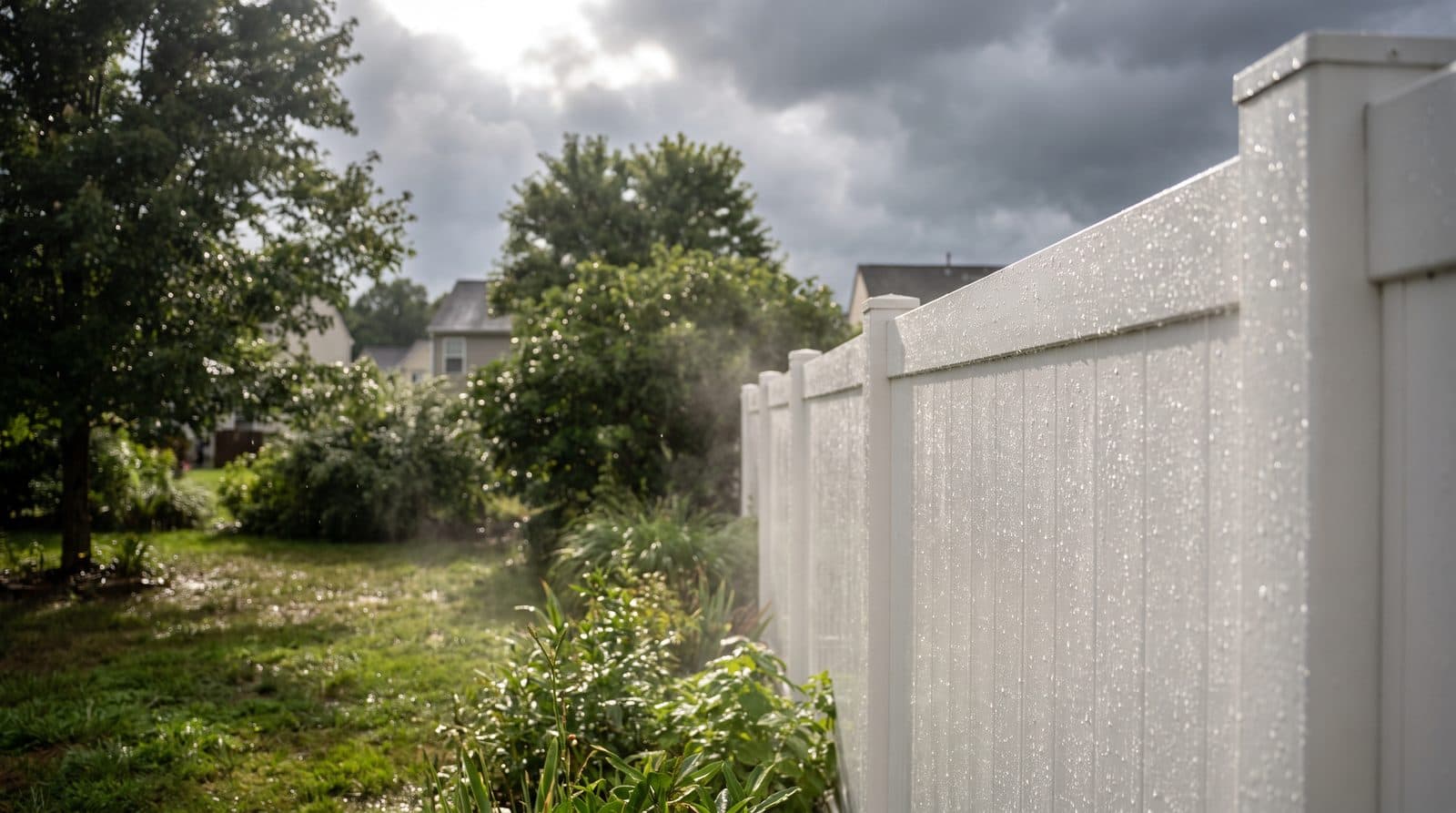
North Carolina's hot, humid summers, periodic storms, and clay-heavy soil are hard on fencing. The material that lasts longest in the Charlotte area depends on how much maintenance you're willing to do and what you're fencing for. Here's how the common options hold up.
Vinyl: best for low maintenance in humidity
Vinyl handles NC humidity and rain well — it won't rot, warp, or feed mold the way untreated wood can, and it never needs painting. It's a strong choice for privacy fencing if you want to install it once and forget it.
The trade-off is upfront cost (around $30–$55 per foot installed) and that damaged panels are replaced rather than patched.
Aluminum: best for pools and rust resistance
Aluminum doesn't rust, making it ideal for the Charlotte area's humidity and for pool enclosures around Lake Norman and Lake Wylie. It handles slopes well and gives an ornamental look without wrought iron's maintenance.
It isn't a privacy fence, so it's best for front yards, pools, and decorative borders.
Wood: popular and affordable, with upkeep
Wood is still the most common privacy fence in the Charlotte area and the most budget-friendly for full privacy. The catch in NC's climate is maintenance: plan to stain or seal it every few years to fight moisture, warping, and insects.
Cedar resists rot better than pressure-treated pine but costs more. Either way, proper post setting in our clay soil is what determines how long it lasts.
Chain-link: best value for durability
Galvanized chain-link shrugs off heat and humidity with essentially no maintenance and the lowest cost. It offers little privacy on its own but is hard to beat for pets, security, and large areas.
FAQ
What fence lasts longest in North Carolina?
Vinyl and aluminum tend to last longest with the least maintenance in NC's humidity, while wood requires regular sealing to reach a comparable lifespan.
Does humidity damage wood fences?
Over time, yes — NC humidity and rain can cause untreated or unsealed wood to warp, rot, or attract insects, which is why periodic staining or sealing matters.