Fence Property Line Rules in North Carolina
Updated July 2026

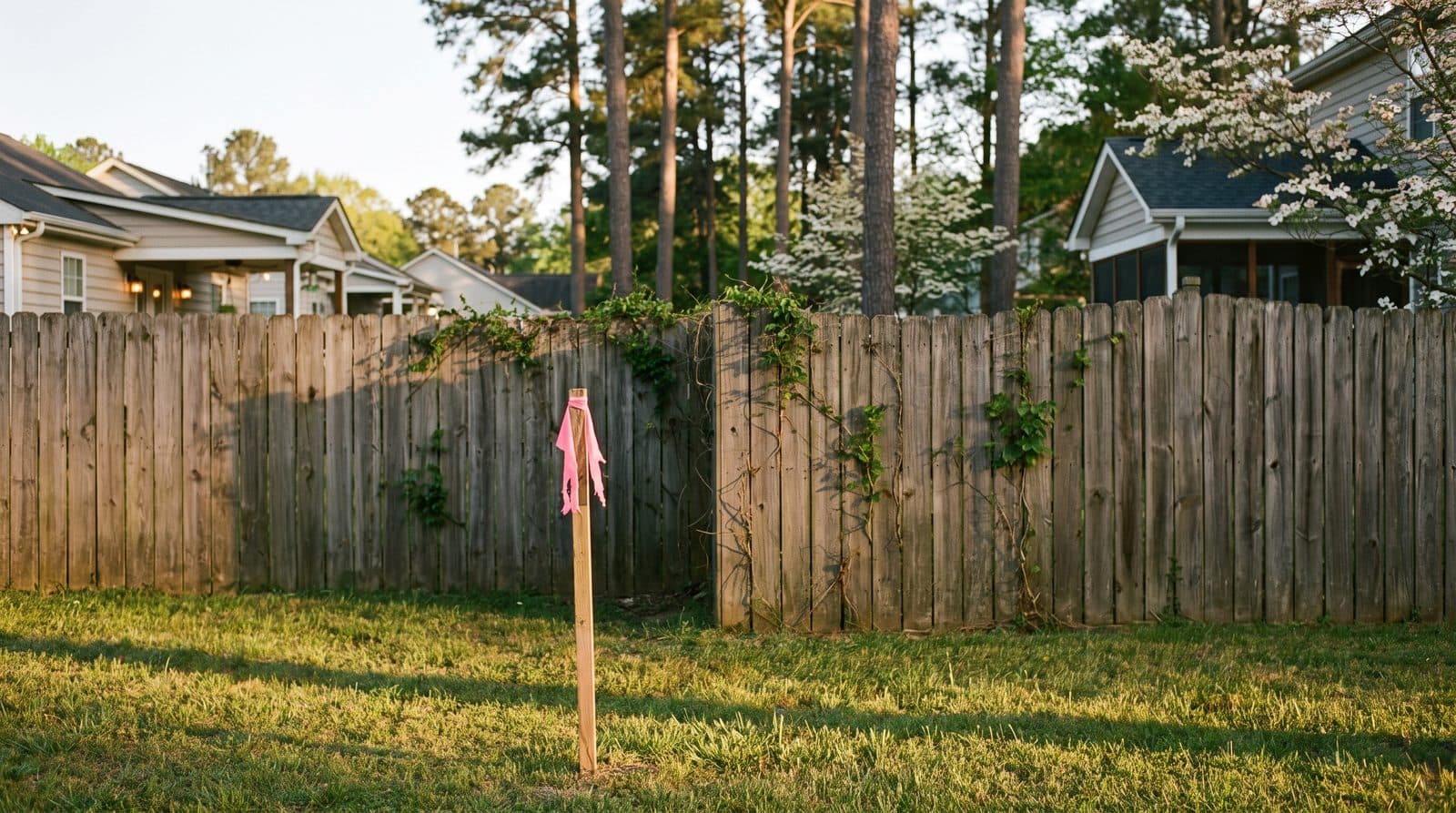
Most fence disputes aren't about the fence — they're about the line. In North Carolina, where the fence sits relative to the property boundary determines who owns it, who maintains it, and whether it might one day have to come down. Here's how placement, cost-sharing, and neighbor rules generally work in NC. (This is general guidance, not legal advice — for a live dispute, talk to a real estate attorney.)
Where can you put the fence?
The safe default is entirely on your own property, typically set a few inches to a foot inside the line. That keeps ownership unambiguous: it's your fence, on your land, and you don't need the neighbor's permission to build or later replace it.
Building exactly on the boundary makes it a shared structure in practice, which means shared decisions about maintenance, height, and replacement. If you and your neighbor want a true line fence, put the agreement in writing — including who pays for what — so it survives either of you selling the house.
Find the actual line before you dig
Don't trust an old fence, a hedge, or memory — existing fences are frequently off the true boundary. Check your recorded plat (Mecklenburg and surrounding counties have them online) and look for survey pins at the corners of your lot.
If there's any doubt, a professional boundary survey typically costs a few hundred dollars in the Charlotte area. That's cheap insurance compared to moving a fence: an encroaching fence can be an expensive problem at resale even if the neighbor never complains.
Does your neighbor have to chip in?
Generally, no. North Carolina has no statute requiring a neighbor to share the cost of a residential boundary fence — the person who wants the fence pays for it. (NC's "lawful fence" statutes deal with livestock containment in agricultural settings, not back-yard privacy fences.)
Neighbors often do split costs voluntarily when a fence benefits both yards. If you agree to share, write it down: the split, the material, the height, and who handles future repairs.
The rules that still apply on your own land
Being inside your line doesn't exempt you from zoning: height limits (commonly around 6 feet in side and rear yards, lower in front), corner sight-distance triangles, and easements all still apply. Never fence across a recorded utility or drainage easement without checking — utilities can remove fencing in an easement, at your cost.
HOA covenants layer on top of all of it and are usually the strictest rules in play across the Charlotte metro. Get written approval before ordering materials.
If a dispute is brewing
Start with a conversation and the plat, not a demand letter — most line disagreements are honest confusion. A joint survey settles the fact question, and a written boundary-line agreement can settle it permanently.
Act promptly if a neighbor's fence encroaches on your land: long-standing encroachments can ripen into legal claims over time in NC, and silence reads as acceptance. Document, communicate in writing, and escalate to mediation or an attorney only if needed.
Good fences start with a good number
Once you know where the line is, get a realistic price for the fence itself: trace the exact run on our satellite-map calculator and compare materials for your actual yard in under a minute.
FAQ
Can I build a fence on the property line in NC?
Only with your neighbor's agreement, since a true line fence is effectively shared property. The safer default is building fully on your own side, a few inches to a foot inside the line.
Who pays for a fence between neighbors in North Carolina?
The person who wants the fence. NC has no law requiring neighbors to split the cost of a residential boundary fence, though voluntary cost-sharing agreements are common — get them in writing.
Do I need my neighbor's permission to build a fence?
Not if the fence is entirely on your property and meets zoning and HOA rules. You only need agreement for a fence placed on the shared boundary itself.