DIY vs. Professional Fence Installation: Real Costs
Updated July 2026

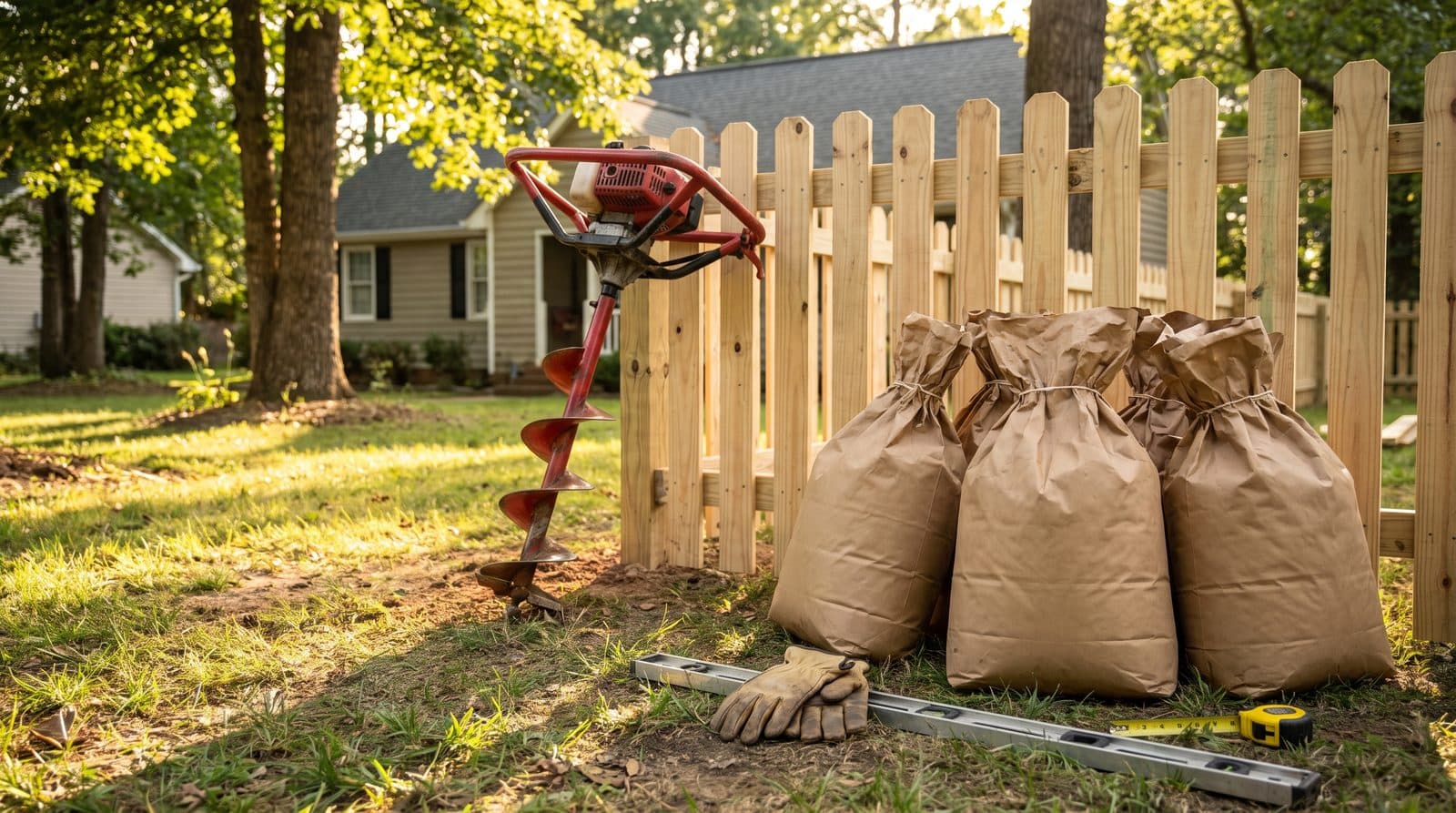
Labor is roughly half the cost of an installed fence, so DIY looks like an easy way to cut a $5,000 project toward $2,500. Sometimes it is. But post-setting is unforgiving work — especially in the Carolinas' clay soil — and a leaning DIY fence costs more to fix than a pro install would have cost up front. Here's an honest comparison.
What DIY actually saves
Installed wood fencing runs about $18–$35 per linear foot in the Charlotte area, and materials alone typically account for roughly half of that. On a 150-foot wood privacy fence, doing the labor yourself can realistically save $2,000–$3,000.
The savings shrink for vinyl and ornamental metal: panels are less forgiving of post-spacing errors, and specialty tools eat into the margin. Chain-link and prefab wood panels are the most DIY-friendly; wrought iron rarely is.
What the job really involves
Every fence starts the same way: call 811 to mark utilities, confirm your property line (a survey if you're not certain — building on the neighbor's side is the most expensive DIY mistake), then dig post holes about a third of the post's height, typically 2 feet or deeper.
In Charlotte-area clay, that digging is the hard part. Renting a gas or hydraulic auger (roughly $60–$100 a day) is all but mandatory past a handful of holes. Posts get set plumb in concrete, aligned to a string line, and everything after that — rails, pickets or panels, gates — depends on getting those posts right.
Budget real time: a first-timer with a helper typically covers 50–100 feet per weekend, so a full yard is often two to three weekends.
When DIY makes sense
Short, straight runs on flat ground; chain-link or prefab panel wood; garden and pet enclosures; and repairs to an existing fence are all good DIY territory. If your layout is a simple rectangle with one gate and you own or can borrow the tools, the math usually works.
When to hire a pro
Slopes, long runs, lots of corners, and rocky or root-bound ground multiply the difficulty fast. Pool barriers should meet code the first time — a failed inspection delays your pool. And many Charlotte-area HOAs require professional-grade results even when they allow DIY, so a wavy fence line can turn into a redo letter.
There's also the warranty math: reputable installers warranty their workmanship, and their material pricing is often better than retail — which narrows the true gap between DIY and pro.
Price the pro option before you decide
The DIY decision is only informed if you know what a professional install actually costs for your yard. Trace your fence line on our free satellite-map calculator to get a realistic installed range first — then decide if the savings are worth your weekends.
FAQ
How much does DIY fence installation save?
Labor is roughly half the installed price, so a 150-foot wood privacy fence that quotes around $5,000 installed might cost $2,500–$3,000 in materials and tool rental DIY — before you count your time.
Is it hard to install a fence yourself?
The carpentry is manageable; the digging and post-setting are the hard part, especially in clay soil. Plumb, well-set posts in concrete are what separate a 20-year fence from a leaning one.
Do I need a permit to build my own fence?
Usually not for a standard residential fence in the Charlotte area, but zoning height/setback rules and HOA approval still apply, and you must call 811 before digging. Confirm locally first.