Fence Installation Cost in 2026: Averages by Material, Height & Yard Size
Updated July 2026

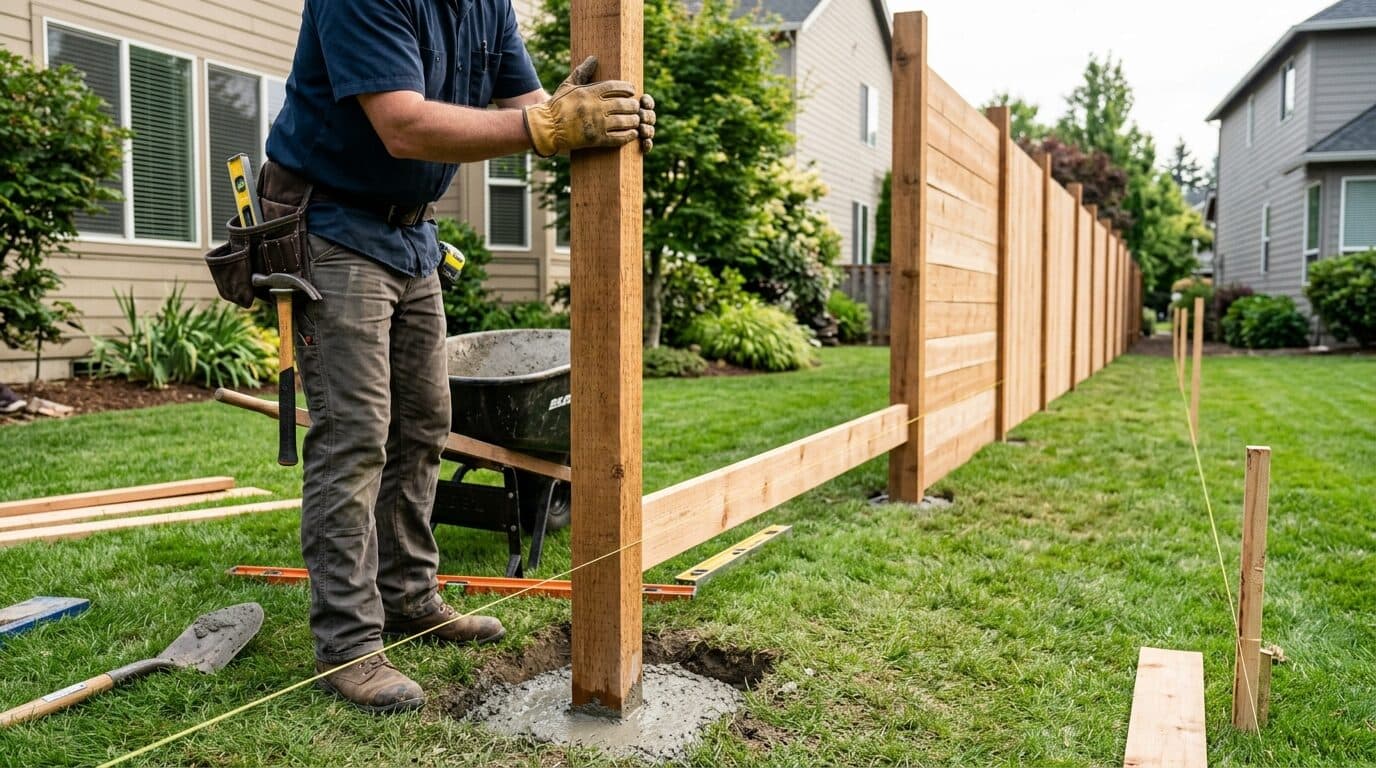
Most homeowners pay $15 to $60 per linear foot to have a fence installed in 2026, which puts a typical 150-foot backyard between roughly $2,300 and $9,000 depending on material and height. Chain-link is the cheapest option, wood is the most popular, and vinyl, aluminum, and wrought iron sit at the premium end. Here's the full breakdown.
Fence installation cost per linear foot, by material
Installed prices — materials plus labor — cluster into clear bands. Chain-link runs about $15–$30 per linear foot, wood privacy fencing about $18–$35, vinyl about $30–$55, aluminum about $28–$55, and wrought iron about $40–$82. Within each band, taller fences, thicker posts, and decorative styles push toward the top.
Per-foot pricing is the number to compare quotes with, because it folds in everything: digging, posts, concrete, panels, and hardware. A contractor quoting a suspiciously low per-foot rate is usually leaving out gates, removal of the old fence, or haul-away.
The fastest way to turn these ranges into a number for YOUR yard is the fence cost calculator — draw your fence line on a satellite photo of your property and it prices each wall instantly.
How much does a 200-foot fence cost?
At the 2026 bands above, a 200-foot run costs roughly $3,000–$6,000 in chain-link, $3,600–$7,000 in wood, $6,000–$11,000 in vinyl, and $5,600–$11,000 in aluminum, before gates. Add $200–$700 per gate depending on material, and $3–$5 per foot if an old fence has to come out first.
Shorter runs cost more per foot than long ones: the crew's mobilization, layout, and cleanup time is spread over fewer feet. That's why a 60-foot section rarely costs half of what a 120-foot section does.
For totals at other lengths, see what fencing a yard costs by size.
Labor vs. materials: where the money goes
Labor is typically 30–50% of an installed fence price. Post setting is the expensive part — every post gets a hole dug below the local frost line, set in concrete, and left to cure before panels go on. Rocky or clay-heavy soil, tree roots, and steep grades all add labor hours.
Materials pricing moves with lumber and PVC markets. Pressure-treated pine remains the value pick for wood; cedar adds roughly $5–$8 per foot; vinyl and aluminum cost more upfront but eliminate staining and repainting cycles.
What makes fence installation cost more
Height is the biggest single multiplier — an 8-foot privacy fence uses more material and heavier posts than a 6-foot one and can run 25–40% more per foot. Slopes require stepped or racked panels, which add cutting and fitting time. Gates are priced each, and driveway (double) gates cost the most.
Site factors matter too: limited access for equipment, old fence removal, buried utilities that force hand-digging, and permit or HOA requirements in some areas. If a quote surprises you, ask which of these drove it — good contractors will itemize.
Fence cost by region
Labor rates move fence prices 10–20% either side of the national bands: coastal metros and the Northeast trend high, while much of the South and Midwest lands at or below the middle. Local soil is a hidden regional factor — clay and rock slow post-digging wherever you are.
For dialed-in local numbers in the Carolinas, see our city-by-city pricing pages — Charlotte and the full metro list — which model local installed rates by material and height.
Local fence installation cost by city
We publish localized installed-price pages across the Carolinas. Charlotte metro (NC): Charlotte, Matthews, Waxhaw, Mooresville, Huntersville, Cornelius, Concord, Gastonia, Pineville, Indian Trail, Kannapolis, Mint Hill, Monroe, Harrisburg, Belmont, Davidson, Mount Holly, Stallings, and Weddington.
Charlotte metro (SC): Fort Mill, Rock Hill, Tega Cay, Lake Wylie, and Indian Land.
The Triangle (NC): Raleigh, Durham, Cary, and Chapel Hill. Each page breaks down installed cost by material and fence height for that market.
How to keep the price down
Pick the material for the job, not the catalog: chain-link or budget options for containment, wood for privacy per dollar, vinyl or aluminum when you're paying to never maintain it. Fence only the sides you need — a shared or wooded boundary may not need fencing at all.
Get an instant baseline before you talk to anyone: the calculator prices your actual yard in two minutes, so every contractor quote you collect has a reference number to beat.
FAQ
How much does it cost to install 150 feet of fence?
Roughly $2,300–$4,500 for chain-link, $2,700–$5,300 for wood privacy, $4,500–$8,300 for vinyl, and $4,200–$8,300 for aluminum at 2026 installed rates, before gates and old-fence removal.
What is the cheapest fence to have installed?
Chain-link, at about $15–$30 per linear foot installed. Among privacy options, pressure-treated pine wood is usually the least expensive per foot.
How much do fence installers charge for labor?
Labor typically accounts for 30–50% of the installed price — roughly $5–$20 per linear foot depending on material, height, terrain, and local rates.
Is it cheaper to install a fence yourself?
DIY can save most of the labor share on simple, flat runs, but post-setting mistakes are expensive to redo and tool rental eats into savings. See our DIY vs. professional comparison before deciding.